
Knit Blanket on Loom: Flat Panels, Stitches and Yarn Choices (2026)
Learn how to plan a knit blanket on a long or round loom, compare single and double knitting, choose yarn, and join flat panels using sourced help.
Sections8
To knit a blanket on a loom, choose a pattern that matches the loom's peg spacing and the yarn you plan to use. A long loom can make a broad panel; a round loom can also make flat fabric when you work back and forth. If the available width is small, choose a panel pattern with a clear joining method.
The short answer: Match the pattern to the loom before buying yarn. Peg spacing, stitch type and yarn thickness set the fabric's gauge. A round loom can make flat panels, while a long board may offer single or double knitting. Make a sample, follow the designer's cast-on and bind-off, and join panels using the method in the pattern.
Knit blanket on loom: choosing your method
The chunky knit blanket guide compares the main blanket routes. A loom holds stitches on pegs while a hook moves loops. For shopping help, use the existing chunky blanket loom guide. For needle knitting, compare the hand knit blanket guide.
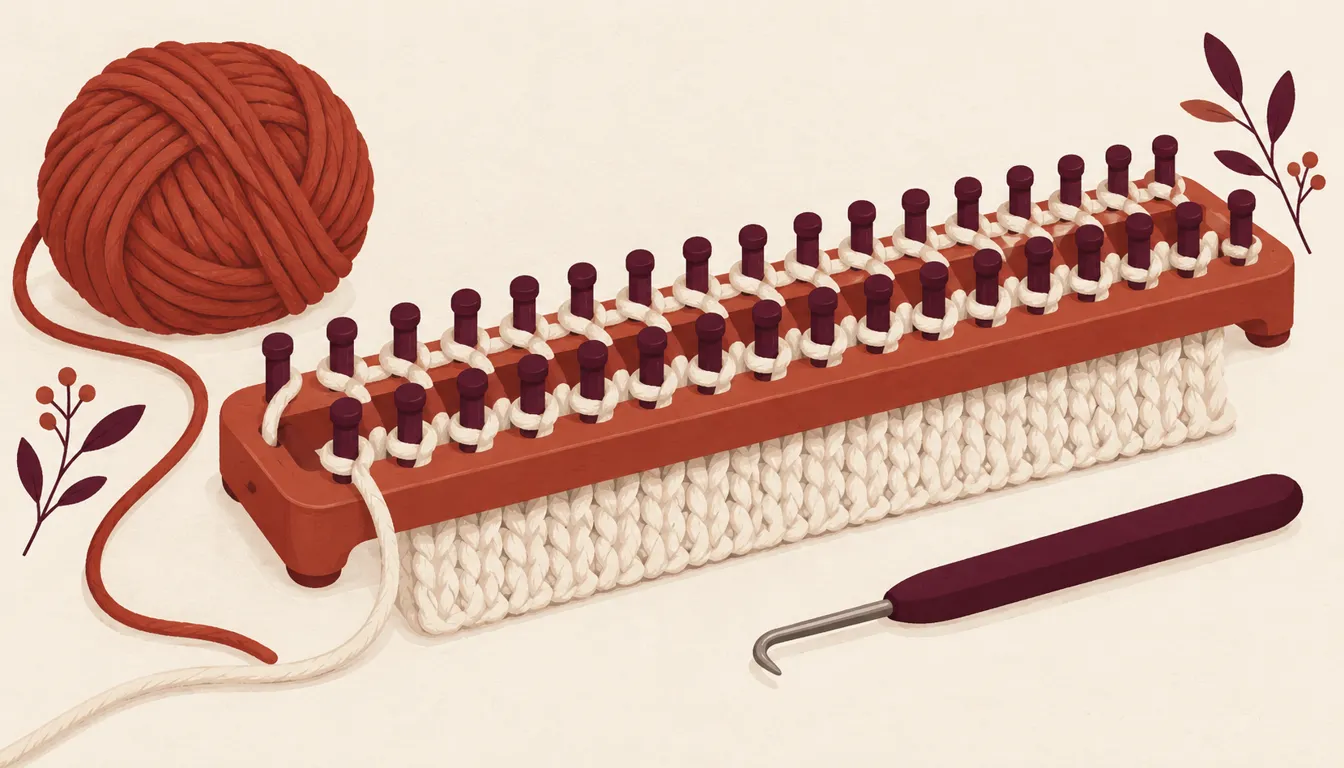
Knitting Board's FAQ explains that a knitting board, also called a long loom or rake, can create double-knit fabric. It also explains how to work flat on a round loom by reversing direction before joining the first and last pegs. The loom's shape alone does not tell you which fabric the pattern uses.
Read the full materials list. Check the named loom, peg count, spacing, yarn and stitch. A pattern that fits one loom may need changes on another. Choose a close match when you are learning so you can focus on the stitch rather than redesigning the whole project.
Long looms, round looms and double knitting
Single knitting uses a row of pegs to hold a single layer of fabric. That row may be straight, curved or part of a round loom. Flat work goes back and forth rather than joining into a tube. It is a useful option for panels and scarves as well as blankets.
Double knitting uses opposing rows of pegs to make a thicker, two-sided fabric. Follow the board's instructions for its yarn path. It uses a different setup from working a single layer around the outside of a long loom. Knitting Board's FAQ describes this difference and notes that loom spacing matters when moving a pattern to another tool.
A round loom can make a rectangle. Instead of continuing around to join the edges, you leave the flat edges separate and turn back across the pegs. This is why a loom sold for hats can still be useful for a blanket made in strips. Check the pattern for how many pegs it uses and which edge treatment it needs.
An adjustable or wider blanket loom may let you make the piece in one panel. A narrow loom may suit smaller sections that are joined. Decide which finish you want before buying the tool. Seaming several panels is a different task from binding off a wide single piece.
Peg spacing and yarn thickness
Gauge is the stitch and row count in a measured sample. On a loom it depends on peg spacing, yarn, stitch and tension. A wide gap between pegs can make a loose fabric with a fine yarn. A thick yarn on close pegs may be hard to lift over the loops.
The Knitting Board FAQ recommends a test swatch when changing yarn and says that matching spacing and available pegs matters when sharing patterns between looms. Use this advice before committing to a blanket amount. The same yarn weight label does not ensure the same result on every loom.
Our extra bulky yarn guide helps with labels, and the chunky blanket yarn guide compares fibers. Pick care needs as well as thickness. A blanket you plan to wash often should fit your laundry routine.
Test whether you can move the hook without forcing it. The yarn should slide and the loops should lift without snagging. A very tight wrap can make the work tiring. An open sample may need a different stitch, yarn or loom rather than harder pulling.
E-wrap, knit and purl stitches
E-wrap makes a loop around a peg with a path that resembles a small letter e. The lower loop is lifted over the upper loop to form a stitch. It is a common starting method, but it produces a different fabric from some other loom knit stitches. Use the stitch named in the chosen pattern.
A purl stitch changes the yarn path and the visible texture. Knits and purls together can create ribbing, garter and other surfaces. KB Looms' blanket pattern archive includes a Garter Stitch Baby Blanket route and other blanket projects. Open the individual pattern's instructions to check the exact loom and stitch it requires.
Practice the chosen stitch on a small sample. Keep the yarn path loose enough for the hook to move. Look for stretched edge loops and skipped pegs. A short practice piece is easier to undo than a blanket width.
Garter texture needs the stitch sequence written for loom work. Needle-knit shorthand can be misleading because a loom may keep the same face toward you throughout the work. Learn the loom version from the designer or loom maker before trying to adapt a needle pattern.
Making and joining blanket panels
Panel width comes from the pattern and sample, not simply the physical length of the loom. Choose a panel design that gives finished measurements and joining instructions. Make the first panel, wash it as intended, and check its size before repeating it.
Keep panels consistent in stitch and tension. Mark the starting edge so you can place each piece the same way for joining. If you use stripes, plan whether the color bands should line up across the blanket. Keep a note of the yarn used in each section.
Lay the panels side by side before seaming. Use the join in the pattern and check that it has enough give for the fabric. A tight seam can shorten one side or leave a ridge. Match the edges as you go instead of stretching one panel to reach the other.
The knit blanket guide compares other modular blanket types. After a blanket, a shawl offers another way to think about fabric shape and drape.
Finishing and caring for the blanket
Read the bind-off method before you begin. The ending edge needs to suit the stretch and firmness of the fabric. Try that finish on the sample so you can see whether it draws in. Save the yarn labels until the blanket is done.
Follow the label's wash and dry directions. Support the weight when moving the wet blanket. Check the joined seams and woven ends after washing. Let the fabric dry fully before folding it for storage.
Knit blanket on loom FAQ
Can I knit a blanket on a round loom?
Yes. A round loom can make flat fabric when you work back and forth without joining the edges into a tube. A panel pattern lets you build a wider blanket from smaller pieces. Match the loom's spacing and peg count to the pattern before starting.
Why does my loom blanket have large holes?
Check the yarn thickness, peg spacing and stitch used in your sample. Loose tension may add to the open look, but pulling hard may make the loops difficult to work. Choose a pattern written for your loom and test the fabric before making a full panel.
Is a long loom always better for blankets?
A long loom can hold a broader panel, but the right choice depends on the pattern and the finish you want. A round loom can work for joined strips. Compare spacing, stitch options and comfort in your hands before choosing based on length alone.
Can I use a needle-knit blanket pattern?
Choose a loom-specific pattern while you learn. Needle and loom stitches can use different methods, and the available width may differ. Knitting Board discusses conversion in its FAQ, but a conversion needs knowledge of both tools. A matching published loom pattern gives you a clearer starting point.
Verdict on a knit blanket on loom project
For a knit blanket on loom project, begin with the tool and a matching pattern. Test the yarn and stitch, decide between a wide panel and joined strips, and practice the finish on your sample. These choices make the full blanket easier to manage.