
Knit Dishcloth Pattern: Cotton, Stitches and Reading the Instructions (2026)
Learn how to choose a knit dishcloth pattern, read its yarn and needle notes, compare simple stitches, and care for cotton kitchen cloths.
Sections8
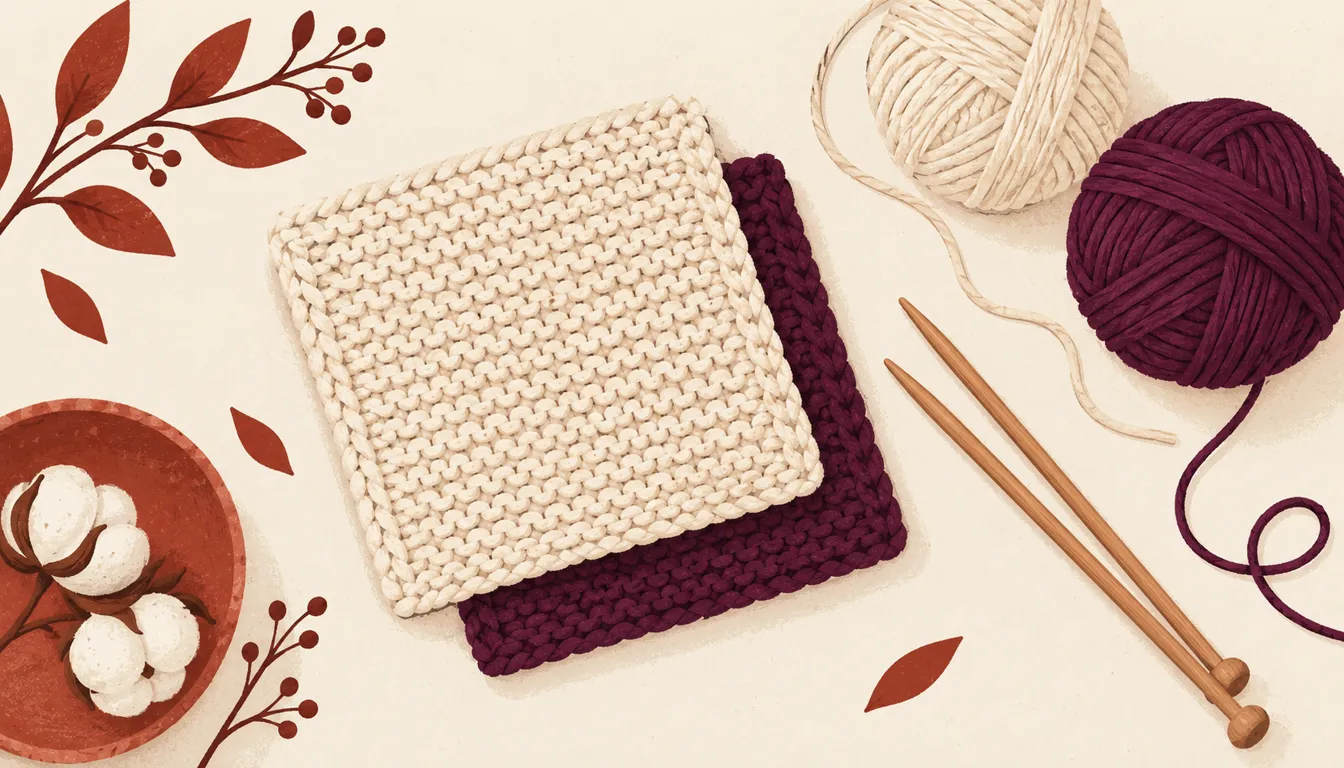
A knit dishcloth pattern is a useful first pattern because the finished cloth can work well even when your tension is still settling. Choose cotton yarn, a stitch you can read, and instructions with a clear materials list. Garter stitch is a simple starting point. Seed stitch or basketweave gives you more practice moving between knits and purls.
The short answer: Choose a knit dishcloth pattern by stitch and yarn before color. Cotton suits everyday kitchen cloths. Use the needle size in the pattern as a starting point, then check that your sample feels firm but flexible. A small change in finished size often matters less here than it does for a fitted hat or sweater.
Choose a knit dishcloth pattern for your next skill
Dishcloths fit into the wider chunky knit blanket and beginner project guide, but they use a different yarn and fabric from a thick throw. You want a cloth that bends around a cup and dries between uses. Start with our free knit dishcloth patterns when you are ready to pick a design.
Look at the skills rather than the photo alone. A simple square may ask for slipped stitches, a chart or an I-cord hanging loop. Read the whole pattern before casting on. If a skill is new, practice it on scrap yarn first.
Artful Homemaking's Grandmother's Favorite dishcloth is a sourced example of a diagonal garter cloth. Purl Soho's Knit + Purl Washcloth is a free seed-stitch choice with a border and hanging loop. Compare these to see how different skills can fit in a small project.
Cotton yarn and needle size
Check both fiber and yarn weight on the label. Cotton is a useful starting choice for kitchen cloths; the linked Grandmother's Favorite page uses cotton yarn. Wool's care needs make it less convenient for a cloth you expect to wash often. Choose a smooth, light color while you learn so you can see the loops.
Our I Love This Cotton yarn guide helps you read a cotton label. For tools, the beginner knitting needle guide explains needle shapes and materials. Straight needles can hold a small square. Circular needles also work when you knit back and forth, turning at the end of each row.
The needle size belongs to the pattern and your tension together. For example, the Knit + Purl Washcloth listing names DK yarn and US 6, or 4 mm, needles. That is a starting point for that design. It is not a size to use for every cotton cloth.
If the sample feels stiff and hard to bend, reconsider the needle size or yarn. If it has loose holes and feels floppy, check your tension. Cotton has less spring than wool, so avoid pulling each stitch tight after making it. Let the needle shape the loop.
Garter, seed and basketweave dishcloth stitches
These stitches give quite different practice. Use the designer's instructions for the exact stitch count, border and repeat.
- Garter stitch: When worked flat, knitting each row makes ridges. It is a useful choice when you want to focus on holding the yarn and keeping edge stitches even.
- Seed stitch: Knit and purl stitches form small bumps. You learn to recognize both kinds of stitch rather than relying only on a row number. Purl Soho uses it in the Knit + Purl Washcloth.
- Basketweave: Blocks of knit and purl texture form a woven-looking surface. Read the repeat carefully, since a change in row order changes the blocks.
- Waffle texture: A textured cloth gives you another way to practice reading repeats. The free Waffle Stitch Washcloth in Santolina is a sourced example.
Place a marker where the border ends if the pattern allows it. This helps you keep the edge separate from the main texture. Keep a row note beside the pattern when the stitch sequence changes. A cloth is small, but it is still easier to fix a mistake while it is close to the needle.
How Grandmother's Favorite construction works
The classic diagonal cloth begins near a corner. Increases widen the fabric toward the center. Decreases then narrow it toward the opposite corner. The result is a square worked on the bias, meaning the rows run diagonally across it.
Some versions use yarn overs to make an eyelet edge. A yarn over adds a loop and can make a small hole. A decrease removes a stitch from the live count. The Artful Homemaking version supplies the actual pattern and materials. Follow that version's instructions as a whole rather than mixing its beginning with another designer's ending.
This construction is useful practice for shaping. Count your live stitches at the point the pattern asks you to switch from increasing to decreasing. Mark that point on your printed copy. You can then see whether the width and shape are moving in the right direction.
Reading a dishcloth knit pattern
Find the materials, finished size, gauge and abbreviations before the first instruction. Gauge is the number of stitches and rows in a measured piece of fabric. A pattern may say gauge is less critical for a cloth, but it still affects size and yarn use.
Use the Craft Yarn Council knitting abbreviations list for shorthand. A repeat means you work the enclosed sequence again where instructed. Right side and wrong side tell you which face of the fabric is toward you. Keep a note of the pattern's terms, since designers may use different ways to write the same move.
For a first cloth, aim for a usable fabric before a perfect finished measurement. If you are making a matching set, gauge matters more because you want the cloths to agree in size. Wash the first one before making the rest. Check whether its edge stays flat and whether the fabric still feels right in your hand.
Washing and finishing cotton cloths
Weave in tails securely, especially near an edge that will be pulled during use. Follow your yarn label's wash and dry directions. Check a washed cloth for loose tails before trimming them close. Spread it out to dry rather than leaving it bunched at the sink.
Keep kitchen cloths and personal washcloths separate by color or storage place. A hanging loop is useful if you have a hook beside the sink. Pick that feature at the pattern stage, rather than adding a bulky loop after the border is finished.
Knit dishcloth pattern FAQ
Does dishcloth gauge have to be exact?
Exact gauge is less critical when a slightly larger or smaller cloth still suits you. The fabric should still feel firm and flexible. Check gauge if you want a matching set, a stated size or a reliable yarn amount. Wash your sample before judging it.
Can I use leftover cotton yarn?
Yes, if the weight and care needs fit the chosen pattern and you have enough length. Keep scraps of different thicknesses separate. A stripe made from a much heavier yarn can change the cloth's width and feel, even when both yarns are cotton.
Is a knitted dishcloth pattern the same as a washcloth pattern?
The construction can be similar. Choose a texture and fiber that suit the intended use. A kitchen cloth may have a firmer surface, while a personal washcloth may need a gentler feel. Read the pattern's yarn notes and make a sample before choosing a set.
What should I try after a dishcloth?
A scarf gives you more practice with even edges, and a hat adds shaping and fit. Browse the hat guide for that next skill. A shawl is another option when you want to learn increases and drape.
Verdict on a knit dishcloth pattern
Start with a knit dishcloth pattern that teaches a skill you want to practice. Use smooth cotton, follow one designer's instructions, and wash the first cloth before making a set. The free pattern list gives you several routes from simple garter to more textured fabric.