
3 Best Knit Triangle Scarf Yarns and Tools in 2026
As an Amazon Associate, this website earns from qualifying purchases.
The short answer
Pick a worsted weight yarn for a sturdy wrap, increase evenly on both edges from the point, and block the finished piece to set its shape.
Sections11
- #1. Patons Classic Wool Worsted: Best overall scarf yarn
- #2. 32-inch Stainless Steel Circular Needle Set (US 0 to 13): Best needles for a growing stitch count
- #3. Meikeer Locking Stitch Markers (150 pieces): Best helper for increases
- Factors to consider when choosing knit triangle scarf supplies
- How a Triangle Scarf Is Shaped
- Yarn and Needle Size for a Triangle Scarf
- Garter Stitch vs. Other Edge Treatments
- Common Triangle Scarf Mistakes to Avoid
- More in this guide
- Knit Triangle Scarf FAQ
- Verdict on Knitting a Triangle Scarf
Our top 3 picks
- 1Best overall scarf yarn
 Patons Classic Wool Worsted
- 100% wool
- Suggested for a US 7 needle
- Made for garments and accessories
- 2Best needles for a growing stitch count
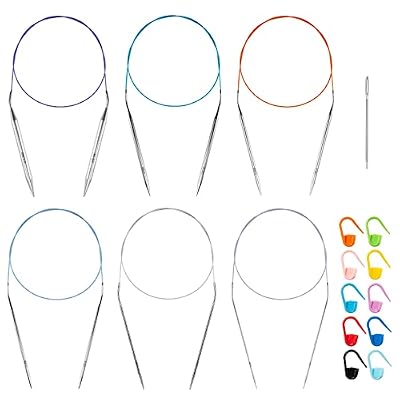 32-inch Stainless Steel Circular Needle Set (US 0 to 13)
- 6 fixed circular needles in US 0, 2.5, 6, 8, 10 and 13
- 32 inches (80cm) from point to point
- Comes with 10 stitch markers and a large-eye blunt needle
- 3Best helper for increases
 Meikeer Locking Stitch Markers (150 pieces, 10 colors)
- 150 locking markers, 15 in each of 10 colors
- Smooth plastic clasp that opens and closes
- Hinged box with a slot for each color
A knit triangle scarf grows from a point into a wide, wrapped shape instead of staying one width the whole way. That shape comes from a simple increase pattern, not a hard technique. It is a good next project once you have finished one plain rectangle scarf.
#1. Patons Classic Wool Worsted: Best overall scarf yarn
Our verdict:
Best overall scarf yarn
Best for a warm triangle scarf that blocks predictably.
View on Amazon- 100% wool
- Suggested for a US 7 needle
- Made for garments and accessories
Keep in mind: Hand wash and dry flat.
Product details checked September 2026
A plain worsted wool knits a warm triangle scarf and blocks into crisp points.
#2. 32-inch Stainless Steel Circular Needle Set (US 0 to 13): Best needles for a growing stitch count
32-inch Stainless Steel Circular Needle Set (US 0 to 13)
Our verdict:
Best needles for a growing stitch count
Best for holding the long final rows of a triangle scarf.
View on Amazon- 6 fixed circular needles in US 0, 2.5, 6, 8, 10 and 13
- 32 inches (80cm) from point to point
- Comes with 10 stitch markers and a large-eye blunt needle
Keep in mind: It skips some in-between sizes, so check your pattern's gauge first.
Product details checked September 2026
A triangle scarf ends with hundreds of stitches on the needle. A long circular needle holds them without crowding, even when you knit flat.
#3. Meikeer Locking Stitch Markers (150 pieces): Best helper for increases
Meikeer Locking Stitch Markers (150 pieces, 10 colors)
Our verdict:
Best helper for increases
Best for marking the center spine and edge increases.
View on Amazon- 150 locking markers, 15 in each of 10 colors
- Smooth plastic clasp that opens and closes
- Hinged box with a slot for each color
Keep in mind: Plastic clasps can loosen over time, so a few may need replacing.
Product details checked September 2026
Markers at the spine and edges show where each increase goes, so the triangle stays even.
Factors to consider when choosing knit triangle scarf supplies
- Weight sets the size. Worsted yarn makes a warm wrap. Fingering weight makes a lighter shawlette.
- Wool blocks well. A wool yarn opens up and holds its points after blocking.
- Circular needle. A triangle scarf grows to many stitches, so a long circular needle holds them better than straights.
- Stitch markers. Markers at the center spine and edges keep increases on track.
- Yardage. Buy the amount your pattern lists, plus one spare skein if you want a bigger scarf.
How a Triangle Scarf Is Shaped
Most triangle scarves start at the point with a small number of stitches, often three to five. Each row or every other row, you increase one stitch near each edge. Over many rows, the piece grows wider and wider until it reaches the wide top edge, where you bind off.
The increase rate controls the final shape. Increasing every row makes a shallower, wider triangle. Increasing every other row makes a longer, narrower one. Both are valid; the choice is about the wrap style you want, not a right or wrong answer.
Some patterns work the opposite direction, starting wide and decreasing down to a point. The finished shape is the same either way. Pick whichever direction the pattern you like uses.
A center-out triangle is a third common construction. You start at the top edge's middle point, increase outward in both directions at once, and the two growing edges meet the point at the bottom. This method finishes a little faster than a side-to-side triangle, since you are effectively knitting two mirrored halves at once.
Yarn and Needle Size for a Triangle Scarf
Worsted weight yarn is the most common choice for a triangle scarf, pairing with a US 7-9 (4.5-5.5mm) needle. It knits at a manageable pace and gives a scarf enough body to wrap and stay put.
A lighter DK or fingering weight yarn, on a smaller needle, makes a thinner, more drapey scarf, at the cost of a longer knitting time since a triangle uses more total stitches than a plain rectangle of the same size.
Buy at least two skeins for a full-size wrap-style triangle scarf. A small point-to-edge shawlette can often finish on one skein, but a wider wrap needs the extra yardage the increases add up to. When in doubt, buy the larger amount the pattern lists, since a triangle uses more yarn near its wide top edge than a plain rectangle of similar overall size.
Garter Stitch vs. Other Edge Treatments
Garter stitch, knit every row, is the most common stitch for a first triangle scarf. It lies flat without curling at the edges, which plain stockinette does not do on its own.
A simple eyelet or slipped-stitch edge along the two growing sides adds a decorative line without changing the difficulty much. This is a good first change to make once a plain garter triangle feels easy.
Stockinette stitch, worked in the center of the triangle with a garter border framing the two edges, is another common combination. The smooth center shows off a variegated or hand-dyed yarn's color changes more clearly than an all-garter piece would, while the border still keeps the edges from curling.
Blocking matters more for a triangle scarf than a plain rectangle, since the point and the increases can pull the fabric slightly out of shape. Pin the scarf to its finished dimensions while damp, and let it dry flat before wearing it.
Common Triangle Scarf Mistakes to Avoid
Mistake 1: Increasing unevenly. If you increase on one edge more often than the other, the triangle grows lopsided. Count your rows between increases carefully, especially early on when the piece is small and mistakes are easy to miss.
Mistake 2: Guessing the final size. A triangle scarf can grow much wider than expected if you keep increasing past the point a pattern calls for. Check the pattern's stated wingspan and count your rows, rather than knitting until it "looks about right."
Mistake 3: Skipping the edge stitch. Many patterns call for a slipped stitch at the start or end of each row to keep the edge neat. Skipping it can leave a slightly loose, uneven border along both growing sides.
More in this guide
- Wool Triangle Scarf: why wool suits this shape, which weight to pick, and how to block it.
For yarn choices, see our aran weight yarn guide and our DK yarn weight guide. New to needles? Start with knitting needles for beginners.
Knit Triangle Scarf FAQ
How do you shape a knit triangle scarf?
Cast on a few stitches at the point, then increase one stitch near each edge every row or every other row. The piece grows wider until you reach your target wingspan, then bind off.
What yarn works best for a triangle scarf?
Worsted weight is the most common choice, giving enough body to wrap and stay put. A lighter DK or fingering weight yarn makes a thinner, more drapey result.
How much yarn does a triangle scarf need?
At least two skeins of worsted weight for a full-size wrap. A smaller point-to-edge shawlette can sometimes finish on one skein.
Does a triangle scarf curl at the edges?
Plain stockinette can curl, which is why most patterns use garter stitch or an eyelet border instead. Garter stitch lies flat without extra finishing work.
Do you block a triangle scarf?
Yes, more than a plain rectangle scarf. The increases and point can pull the fabric slightly out of shape, so pinning it to its finished dimensions while damp helps it hold the intended shape.
Verdict on Knitting a Triangle Scarf
If a few rows are part of your reading break, our books and book notes offer a separate title list to explore. Put a row note beside your bookmark before switching activities.
A knit triangle scarf is a manageable next project once a plain rectangle scarf feels easy. Pick a worsted weight yarn for a sturdy wrap or a lighter yarn for a drapey shawlette, increase evenly on both edges from the point, and block the finished piece to set its shape. Count your rows as you go, since an uneven increase rate is the single most common thing that throws off the final shape.
Our picks in this topic
3 picks
3 Best Wool Triangle Scarf Yarns and Helpers in 2026
Why wool suits a triangle scarf, what weight and needle size to pick, and whether your wool needs hand washing or can go in the machine.