
Hand Knit Blanket: Planning a Blanket on Needles (2026)
Plan a hand knit blanket on needles with a sourced size chart, yarn estimates, circular needle choices, simple stitches, borders and care.
Sections8
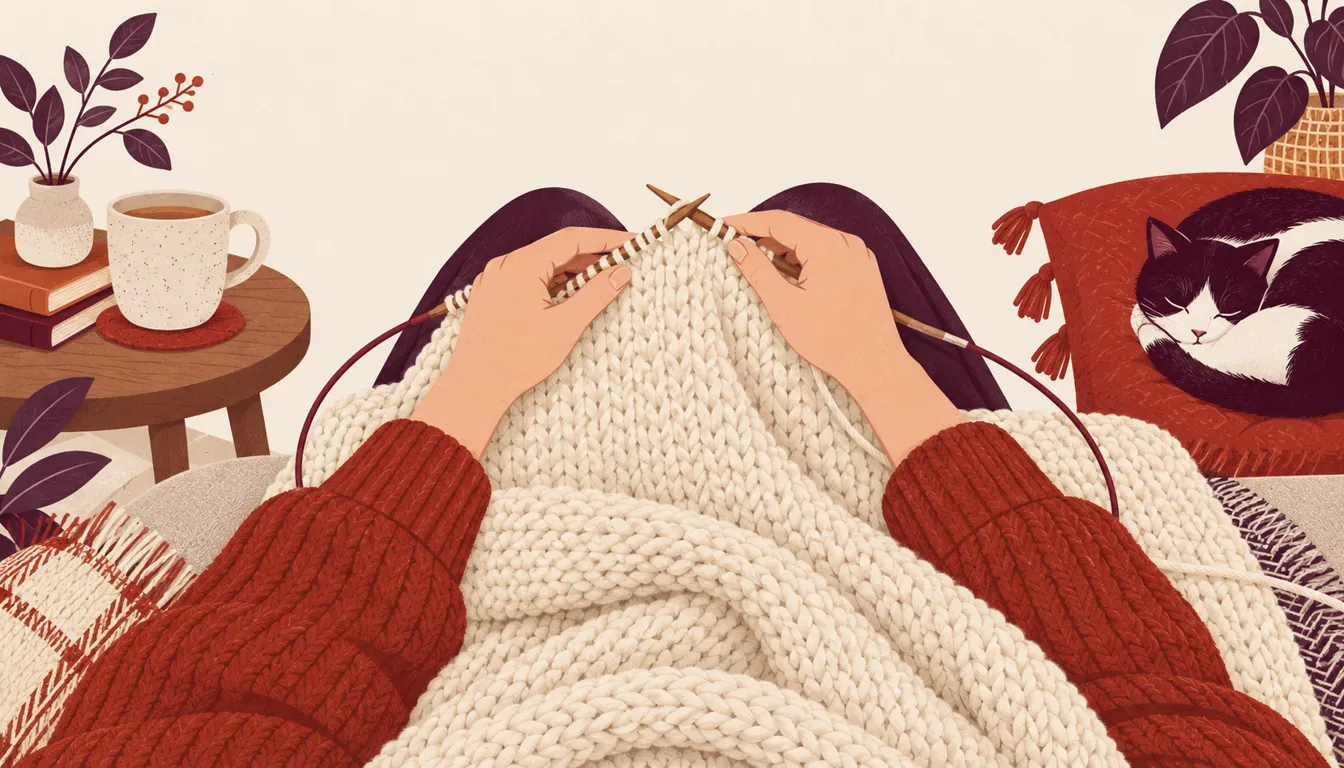
A hand knit blanket worked on needles starts with a size, a yarn and a pattern. Long circular needles can hold a broad row while you knit back and forth. A plain garter throw is a useful beginner choice, but a large blanket still needs a gauge check and a yarn plan. Decide on the care routine before buying enough yarn for the whole piece.
The short answer: Choose a published needle-knit blanket pattern close to the size you want. Match its yarn weight, make and wash a sample, and check the resulting gauge. Use circular needles to support the width. Plan the border with the main fabric, keep the growing blanket supported, and follow the yarn label when washing the finished piece.
Plan your hand knit blanket method
The chunky knit blanket guide compares needles, jumbo hand loops and looms. Here, live stitches sit on knitting needles. For large loops made with your hands, use the separate chunky blanket how-to. For a tool that holds loops on pegs, compare the loom blanket guide.
Needle knitting gives you access to garter, textured, cable and modular designs. Browse the knit blanket pattern guide before shopping. A pattern provides the cast-on, stitch repeat, border and finish as one plan. Follow that plan rather than combining pieces from several designs.
Baby, throw, twin and queen sizes
The Snugglery's blanket size chart gives useful reference dimensions for planning. Baby blankets come in several forms, so choose by use rather than the word baby alone.
| Blanket type | Reference dimensions |
|---|---|
| Stroller | 30 x 36 inches |
| Receiving | 40 x 40 inches |
| Crib/toddler | 42 x 52 inches |
| Small throw | 48 x 60 inches |
| Twin | 60 x 90 inches |
| Queen | 90 x 96 inches |
Scroll for more →
Use these as a starting point. Measure your chair, bed or intended cover area, and check the pattern's finished dimensions. Bed blankets may need extra width for the side drop you want. A thick blanket also needs space for washing and drying, so consider that before choosing the largest size.
For a first project, a smaller blanket is easier to move and store while it grows. Tin Can Knits' Malt is a free worsted-weight pattern with stroller, baby, crib and throw sizes. Its size choices give you a published route instead of resizing a full bed blanket on your own.
How much yarn a hand knit blanket needs
Use the pattern's yardage for your chosen size. The Malt listing gives a total range of 600–2,000 yards across its sizes. Read the downloaded pattern to find the amount for the version you plan to make. The range is not a single estimate for any blanket.
Compare length on the label rather than buying by ball count alone. A large ball may hold less length than a smaller ball of fine yarn. Stitch texture also matters. A dense cable fabric and an open garter fabric use yarn differently. The chunky blanket yarn guide helps you compare thick yarn choices.
If you want a different size, use a pattern with that option where possible. A sample can help estimate yarn use, but it must use the same stitch, yarn and needles as the blanket. Border yarn and any color changes need their own allowance. Keep the estimate tied to the sample rather than a generic chart of skein counts.
Buy the required yarn together where you can and check dye lots. Keep labels and leftover yarn until after the first wash. Write the pattern name, size and yarn choice in your project notes. That makes it easier to repair an edge or order matching yarn later.
Circular needles for a wide blanket
A circular needle is useful even when you are knitting a rectangle. You work to the row's end, turn, and work back. The cable holds the stitches and lets much of the weight rest in your lap. You only join in the round if the chosen pattern asks for it.
Use our beginner needle guide for tool choices. The needle tip size helps set gauge; cable length helps hold the width. Check the pattern's materials list for both. Stitches should move along the cable without being packed so tightly that they are hard to manage.
Inspect the connection between cable and tip before starting a broad row. A rough join can snag yarn or slow each stitch. If you use interchangeable tips, check that they are secure as directed by the maker. Support the blanket on your lap or a table as it grows so the weight does not hang from your hands.
Beginner stitches and borders
Garter stitch makes ridges and lies flat. Seed stitch gives a bumpy texture made from knits and purls. Basketweave uses blocks of texture, while cables cross groups of stitches. Choose a pattern whose skills you can practice in a small sample before starting the full width.
Plain stockinette can curl at the edges. A published pattern may use a garter border or another edge treatment to control that roll. The border may be worked with the body or added later. Read the finish before casting on so you know which approach the designer uses.
For a modular blanket, small pieces can be easier to carry. Log cabin sections and mitered squares offer different ways to build the fabric. They also add picking up stitches or joining work. Our knit blanket guide compares these pattern types so you can choose based on the work you enjoy.
Gauge, care and finishing a large piece
Wash a sample in the intended way and measure it after drying. This checks both size and fabric. A blanket does not need to fit a body, but a gauge change across a wide row can make a large difference to its width. It can also affect whether the planned yarn amount lasts.
Follow the ball band for water temperature, drying and other care. Support a wet blanket when lifting it and avoid dragging it by an edge. Lay it out or dry it in the way the yarn requires. Knitting Board's yarn substitution advice also stresses testing yarn to check the resulting look and size; that same sample habit is useful before a big yarn commitment.
Weave in ends with the blanket's use in mind. Check joins, borders and tails after the first wash. Store the finished blanket clean and dry. A tidy finish makes the project easier to use and maintain.
Hand knit blanket FAQ
Can I knit a blanket with straight needles?
Yes, if the width fits comfortably on them, or if the pattern is made in narrower pieces. A broad blanket can be easier to hold on a circular cable. Choose the tool from the pattern's materials list, and keep the growing fabric supported while you work.
Must I knit in the round on circular needles?
No. Circular needles can hold a flat blanket while you work back and forth. Turn at the end of each row as the pattern directs. The flexible cable supports the width. Joining in the round is a separate construction choice that the designer will state.
Is a chunky blanket always faster?
Thick yarn gives larger stitches, but the final size, stitch and your comfort with the tools still matter. A very heavy project may need more pauses. Choose a pattern you can manage and a fabric you like rather than relying on a fixed finish-time promise.
What small project uses similar skills?
A knit shawl can use the same flat-row skills with lighter fabric and more shaping. A simple scarf is another route. Choose one that introduces the next skill you want while keeping the yarn and stitch easy to read.
Verdict on a hand knit blanket
A hand knit blanket is easier to plan when a published pattern supplies the size, yardage and border. Check a washed sample, choose needles that support the width, and make care part of the yarn decision. Start with a size you can comfortably handle.