
3 Best Manual Yarn Winders: Hand-Crank Options Compared in 2026
As an Amazon Associate, this website earns from qualifying purchases.
The short answer
A sturdy hand-crank cake winder with a metal crank and a firm clamp is the best manual yarn winder for most knitters.
Sections9
- #1. Knit Picks Yarn Ball Winder: Best overall
- #2. ChiaoGoo Wooden Nostepinne: Best no-table option
- #3. Stanwood Large Metal Ball Winder (10 oz): Best for big skeins
- Factors to consider when choosing a manual yarn winder
- Manual Yarn Winder vs. Electric
- Types of Manual Yarn Winder
- Winding a Center-Pull Ball With No Winder
- Manual Yarn Winder FAQ
- Verdict on a Manual Yarn Winder
Our top 3 picks
- 1Best overall
 Knit Picks Yarn Ball Winder
- Winds up to 100 grams (3.5 oz) into a center-pull cake
- Clamps to a table edge up to 1-1/2 inches thick
- Removable spindle and folding guide arm for storage
- 2Best no-table option
 ChiaoGoo Wooden Nostepinne
- Made of wood, by the needle maker ChiaoGoo
- A nostepinne: a hand-held stick you wind yarn around to form a center-pull ball
- Nothing to clamp, crank or plug in
- 3Best for big skeins
 Stanwood Needlecraft Large Metal Ball Winder (10 oz)
- Makes center-pull balls up to 10 oz
- Steel frame with a powder coating and nylon gears
- Sets up without tools
A manual yarn winder is any winder you power by hand. Most are small hand-crank machines that clamp to a table and turn a hank into a center-pull cake. They are quiet, need no power and cost less than electric models, which is why most knitters start with one.
#1. Knit Picks Yarn Ball Winder: Best overall
Our verdict:
Best overall
Best for winding single skeins of most yarn weights at home.
View on Amazon- Winds up to 100 grams (3.5 oz) into a center-pull cake
- Clamps to a table edge up to 1-1/2 inches thick
- Removable spindle and folding guide arm for storage
Keep in mind: A 100 g limit means big blanket skeins need a jumbo winder.
Product details checked September 2026
The Knit Picks Yarn Ball Winder, a hand-crank winder that clamps to a table edge.
#2. ChiaoGoo Wooden Nostepinne: Best no-table option
Our verdict:
Best no-table option
Best for quiet winding anywhere, with no table to clamp to.
View on Amazon- Made of wood, by the needle maker ChiaoGoo
- A nostepinne: a hand-held stick you wind yarn around to form a center-pull ball
- Nothing to clamp, crank or plug in
Keep in mind: Hand winding is much slower than a crank winder for full skeins.
Product details checked September 2026
The ChiaoGoo nostepinne is a plain wooden winding stick, so it works anywhere, with nothing to clamp or plug in.
#3. Stanwood Large Metal Ball Winder (10 oz): Best for big skeins
Stanwood Needlecraft Large Metal Ball Winder (10 oz)
Our verdict:
Best for big skeins
Best for blanket yarn and large hand-dyed hanks.
View on Amazon- Makes center-pull balls up to 10 oz
- Steel frame with a powder coating and nylon gears
- Sets up without tools
Keep in mind: It is heavier and bulkier than a standard plastic winder.
Product details checked September 2026
The Stanwood large winder is still hand cranked, but its powder-coated steel frame holds up to 10 oz, so heavier skeins fit in one cake. A hand-crank winder works best with a swift to hold the hank. See our wool swift guide.
Factors to consider when choosing a manual yarn winder
- The crank: metal cranks tend to last longer than plastic ones.
- The clamp: it should fit your table edge and hold tight. A winder that wobbles while you crank makes messy cakes.
- The gear box: a covered gear box keeps fluff and yarn out of the gears, so it jams less.
- Capacity: check the largest cake it can make. Standard models suit a single skein of most yarn. Bulky skeins may need a larger model.
- The guide arm: a smooth guide keeps fine yarn from catching.
- Setup: some winders come in several parts. Look for one that is simple to put together and take apart for storage.
A manual yarn winder is a tool you may keep for years. It is worth buying one that feels solid, even if it costs a little more than the cheapest option.
Manual Yarn Winder vs. Electric
A manual yarn winder wins on simplicity. There is no motor to fail, no cable and no battery. It is quiet enough to use while someone sleeps in the next room. You also control the speed directly with your hand, which makes it easy to slow down for slippery or delicate yarn.
An electric winder wins on effort. It spins the core for you, so you only guide the yarn. If you wind many skeins, or if cranking bothers your hands, that matters. Our electric yarn winder guide covers the tradeoffs in detail.
For a knitter who winds a few skeins a month, a manual winder does the job at a lower cost.
Types of Manual Yarn Winder
Hand-crank cake winders are the standard choice. You turn a handle and the spinning core builds a flat, center-pull cake. Most hold about one skein of yarn. The yarn ball winder guide explains how they work and how to fix common problems.
Cone winders wind yarn onto a paper or plastic cone. Tufting makers and machine knitters use them to re-spool yarn. Most hand knitters do not need one.
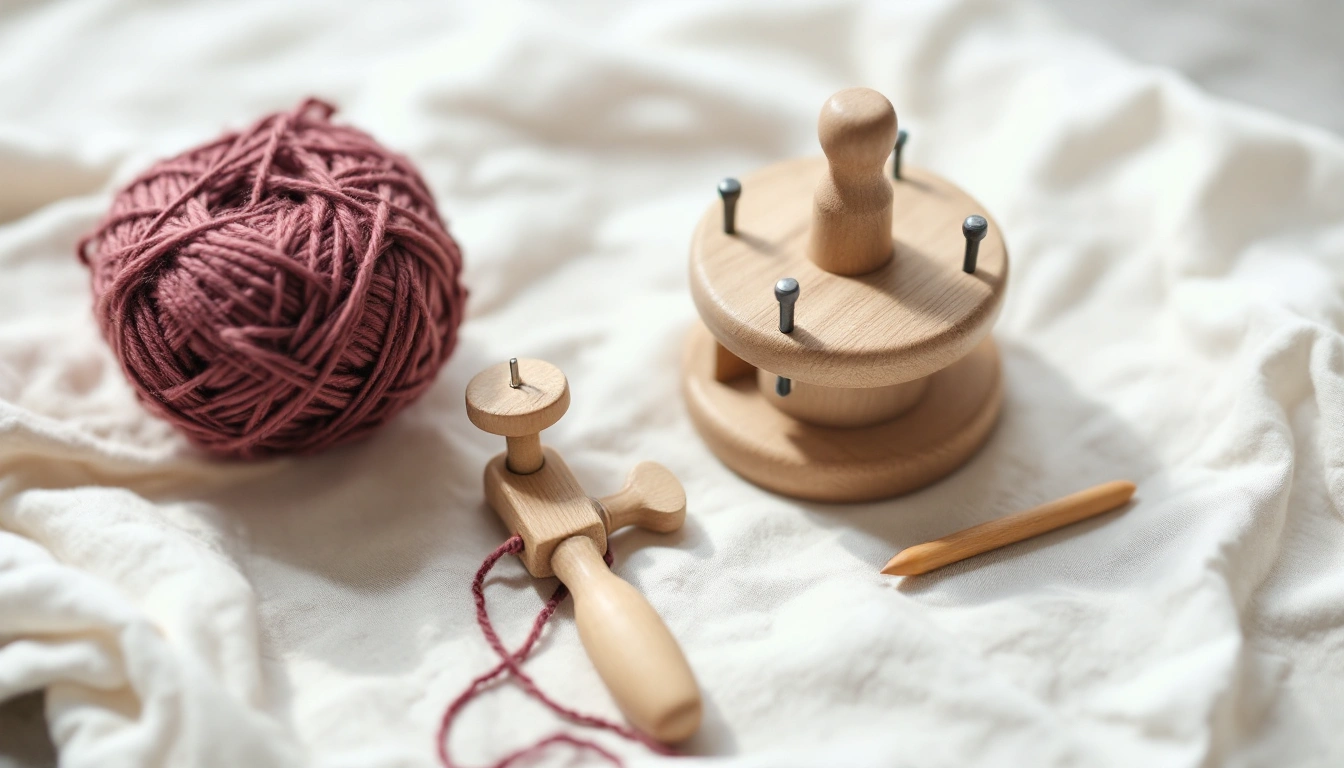
Nostepinnes are smooth wooden sticks, often with a groove at one end. You wrap the yarn around the stick in a slanted pattern, turning it as you go. The result is a center-pull ball. It is slow, but it takes no table space and makes no noise.
Winding by hand is the free option. You can make a center-pull ball around your thumb or two fingers. The method is below.
Winding a Center-Pull Ball With No Winder
You can make a ball that feeds from the center with nothing but your hand. The idea is to start a small core of wraps around your thumb or fingers, keep the starting tail free, and build the ball around that core while turning it. The free tail becomes your center-pull end.
It is slower than a crank, but it works well for leftovers and small skeins. If you would rather use a crank, our yarn ball winder guide explains how a standard winder builds a center-pull cake.
Manual Yarn Winder FAQ
Is a manual yarn winder better than an electric one?
For most knitters, yes. It is cheaper, quieter and needs no power. An electric winder is better if you wind a lot or cranking hurts your hands.
What is a nostepinne?
A smooth wooden stick for winding yarn by hand into a center-pull ball. It is slower than a crank winder but needs no table and no clamp.
How long does it take to wind a skein by hand crank?
Usually a few minutes for a single skein of standard yarn, depending on the yarn and your pace. Winding slowly gives a neater cake.
Can a manual yarn winder handle bulky yarn?
Yes, but bulky yarn fills the core fast. A standard winder may not fit a whole bulky skein, so check the capacity first.
Verdict on a Manual Yarn Winder
A sturdy hand-crank cake winder with a metal crank and a firm clamp is the best manual yarn winder for most knitters. It is quiet and simple, and it turns any hank into a neat cake in minutes. Keep a nostepinne or the hand-winding method in mind for small jobs, and switch to electric only if cranking becomes a chore.