
3 Best Noro Yarns: Kureyon, Silk Garden and Mebuki in 2026
As an Amazon Associate, this website earns from qualifying purchases.
The short answer
Noro yarn is the go-to for long, slow self-striping color; start with Kureyon or Silk Garden on a simple scarf or cowl.
Sections11
- #1. Noro Kureyon (colorway 478, Yatomi): Best overall
- #2. Noro Silk Garden: Best for sheen
- #3. Noro Mebuki: Best silk blend
- Factors to consider when choosing Noro yarn
- What Makes Noro Yarn Different
- Noro Yarn Lines to Know
- Knitting With Self-Striping Noro Yarn
- Noro Yarn Quirks to Expect
- Good First Projects
- Noro Yarn FAQ
- Verdict on Noro Yarn
Our top 3 picks
- 1Best overall
 Noro Kureyon (colorway 478, Yatomi)
- 100% wool, self-striping
- Worsted/aran weight, 110 yards per 50 g
- Single-ply texture, hand wash
- 2Best for sheen
 Noro Silk Garden
- 45% silk, 45% mohair and 10% lambswool
- Worsted/aran weight, 110 yards per 50 g
- Hand wash
- 3Best silk blend
 Noro Mebuki (silk, wool and viscose)
- 40% silk, 30% wool and 30% viscose
- 150 g skein, light (DK) to medium weight
- Suggested needles US 5 to 7
Noro yarn is famous for one thing above all: long, slow color changes that stripe your knitting without you ever changing yarn. It comes from a Japanese company founded by Eisaku Noro, and it has been a fixture in yarn shops for decades. Many knitters buy their first skein just to watch the colors shift.
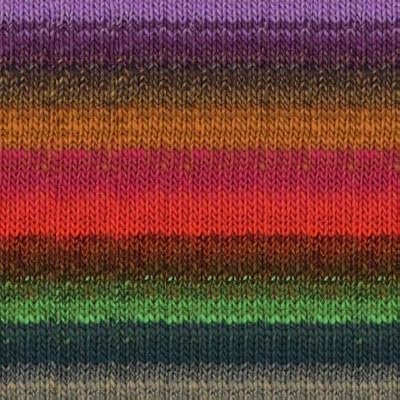
#1. Noro Kureyon (colorway 478, Yatomi): Best overall
Noro Kureyon (colorway 478, Yatomi)
Our verdict:
Best overall
Best for a striped scarf or a felted bag.
View on Amazon- 100% wool, self-striping
- Worsted/aran weight, 110 yards per 50 g
- Single-ply texture, hand wash
Keep in mind: Single-ply wool can have thick and thin spots and the odd knot.
Product details checked September 2026
Noro Kureyon (colorway 478, Yatomi) suits a striped scarf or a felted bag.
#2. Noro Silk Garden: Best for sheen
Our verdict:
Best for sheen
Best for adding silk sheen and a soft halo to a scarf or hat.
View on Amazon- 45% silk, 45% mohair and 10% lambswool
- Worsted/aran weight, 110 yards per 50 g
- Hand wash
Keep in mind: Mohair halo makes mistakes hard to rip back.
Product details checked September 2026
Noro Silk Garden adds silk shine and a soft halo.
#3. Noro Mebuki: Best silk blend
Noro Mebuki (silk, wool and viscose)
Our verdict:
Best silk blend
Best for a drapier Noro for a shawl or a light top.
View on Amazon- 40% silk, 30% wool and 30% viscose
- 150 g skein, light (DK) to medium weight
- Suggested needles US 5 to 7
Keep in mind: With only 30% wool, it has less spring than an all-wool Noro such as Kureyon.
Product details checked September 2026
Noro Mebuki blends silk, wool and viscose in a 150 g skein at light to medium weight. It drapes more than an all-wool Noro, so it suits a shawl or a light top. Buy all the balls for a project at once. Colorways shift between batches, a trait Noro shares with other hand dyed yarn.
Factors to consider when choosing Noro yarn
- Stripe length. Noro yarns change color slowly, so stripes run over many rows. Pick a pattern that shows long color runs.
- Fiber. Kureyon is wool. Silk Garden adds silk and mohair. Mebuki blends silk, wool and viscose for more drape.
- Texture. Noro is thick-and-thin and can hold bits of plant matter. Pick them out as you knit.
- Knots. A skein can hold a knot where the colors jump. Plan to rejoin at the matching color.
- Yardage. Check yards per ball, which vary between lines.
What Makes Noro Yarn Different
Most yarn is dyed after spinning, so a skein is one color or a short repeat. Noro yarn gets its color in a way that produces long runs of one shade that fade into the next. A single ball can move through several colors, each lasting many rows.
The company describes its yarn as handspun in quality and loosely processed. It keeps processing to a minimum so the fiber stays close to its natural state. You feel that in the strand. It is thick in some places and thin in others, and slightly rustic rather than smooth.
The founder's motto was "The World of Nature." The colorways often echo natural scenes, like moss and bark, or sky and autumn leaves.
Noro Yarn Lines to Know
Noro makes many lines. These are the ones you will see most often:
- Kureyon: the classic. It is 100% wool, about 110 yards per 50 gram ball, and knits at roughly 14 to 18 stitches per 4 inches. It turned 30 in 2018. Some shops list it as aran, others as worsted.
- Silk Garden: a blend of 45% silk, 45% mohair and 10% wool. It has about 109 yards per 50 grams and sits in the aran range. The silk gives it a soft sheen, and the mohair adds a light halo.
- Madara: a heavy worsted blend of 60% wool, 30% silk and 10% alpaca, with a tweed look. It comes in larger 100 gram skeins of about 219 yards.
Noro also makes lines in sock and lace weights, plus bulky ones. Check the label for weight and gauge before you pick a pattern. For more on how the aran range works, see our aran weight yarn guide.
Knitting With Self-Striping Noro Yarn
Simple stitches show Noro best. Garter stitch and stockinette, plus simple ribbing, let the color changes read as clean stripes. Busy lace or heavy cables tend to fight the colors.
Plan the stripe width. A narrow piece, like a scarf, uses little yarn per row. The stripes come out wide. A wide piece, like a sweater body, uses much more yarn per row. The stripes come out narrow.
Alternate two balls for bolder stripes. Many knitters work two rows from one ball, then two rows from another. The two color sequences mix and make a striped fabric with more contrast. It is a popular way to knit Noro scarves.
Match sleeves by hand. If you want two sleeves or two socks to match, start each at the same point in the color sequence. Wind off yarn until you reach the matching color, and start there. Expect to use a little more yarn.
Accept some surprise. Even with planning, the colors may not line up exactly. For many knitters, that is part of the appeal.
Noro Yarn Quirks to Expect
Noro yarn is not as uniform as a mill-spun commercial yarn. Knowing what to expect keeps you from assuming a skein is faulty.
- Thick and thin spots: the strand varies. Thin sections can be fragile, so do not tug hard.
- Knots: you may find a knot now and then. The color may jump at a knot. Cut and rejoin if you want the sequence to flow.
- Bits of plant matter: loosely processed wool can hold tiny flecks. Pick them out as you knit.
- A firmer hand: Kureyon in particular can feel scratchy on the skein. It usually softens after a gentle wash.
Hand wash Noro wool yarns in cool water and dry them flat. Most are not superwash and can felt in a machine.
Good First Projects
- A striped garter scarf: the classic Noro project. Alternate two balls every two rows.
- A cowl or hat: a small project shows off one or two color runs.
- Fingerless mitts: quick, and a good way to learn to match a pair.
- A felted bag: Kureyon's wool felts well in hot water if you want a sturdy tote.
Noro Yarn FAQ
What is Noro yarn known for?
Long, slow self-striping color changes and a rustic, handspun-style strand. Kureyon and Silk Garden are its best-known lines.
What weight is Noro Kureyon?
It sits between worsted and aran. Shops list it as either. It knits at about 14 to 18 stitches per 4 inches.
Why does my Noro yarn have knots?
Knots happen now and then in Noro yarn. Many knitters cut out the knot and rejoin so the color flows smoothly.
Is Noro yarn scratchy?
Kureyon can feel firm at first but softens with a gentle wash. Silk Garden feels softer thanks to its silk.
Can I substitute Noro yarn in a pattern?
Yes, if you match the gauge. See our yarn substitutes guide for how to swap safely.
Verdict on Noro Yarn
Noro yarn is the go-to choice when you want long, slow self-striping color without changing yarn. Start with Kureyon or Silk Garden on a simple garter scarf or cowl, let the colors lead, and treat the knots and thick spots as part of the character. Buy all your Noro yarn for a project at once so the colorway stays consistent.