
3 Best Electric Yarn Winders and Whether One Is Worth It in 2026
As an Amazon Associate, this website earns from qualifying purchases.
The short answer
An electric yarn winder is worth it if you wind often or cranking hurts; pick one with speed control and a capacity that fits your skeins.
Sections8
- #1. Caydo Electric Yarn Winder M1: Best overall
- #2. Caydo Electric Yarn Winder A1 Pro Max: Best for big skeins
- #3. Cordless Electric Yarn Winder (1800mAh battery): Best cordless option
- Factors to consider when choosing an electric yarn winder
- How an Electric Yarn Winder Differs From a Hand Crank
- Tips for Using One
- Electric Yarn Winder FAQ
- Our Verdict
Our top 3 picks
- 1Best overall
 Caydo Electric Yarn Winder M1
- Motorized winding with adjustable speed
- Makes cakes up to about 7 oz
- Spring tension helps keep cakes firm
- 2Best for big skeins
 Caydo Electric Yarn Winder A1 Pro Max
- Makes yarn cakes up to 16 oz, per the maker
- Sits on a flat surface with no table clamp
- Adjustable tension and a guide arm for fine to bulky yarn
- 3Best cordless option
 Cordless Electric Yarn Winder (1800mAh battery)
- Runs from a rechargeable 1800mAh battery, so it needs no outlet while winding
- Charges over a Type-C cable
- Stepless speed control and a dual-spring tension guide
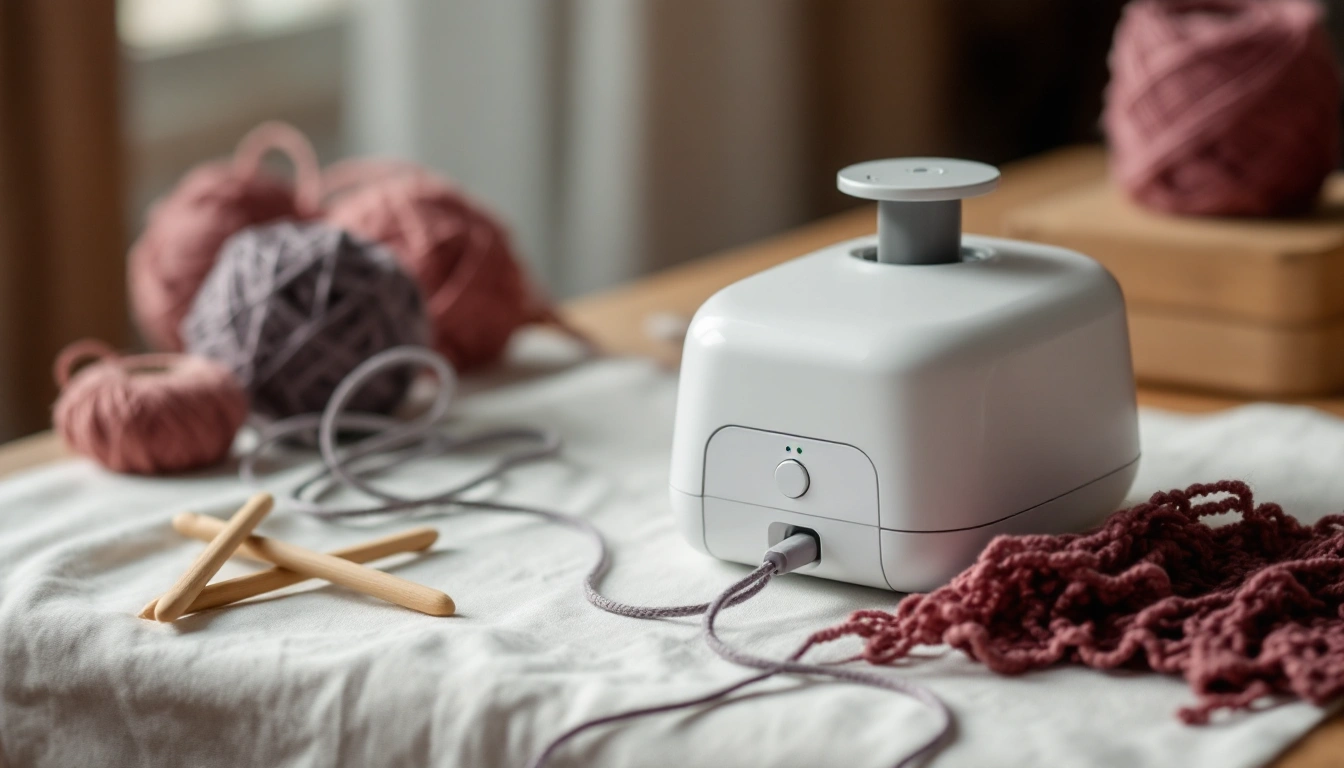
An electric yarn winder does the same job as a hand-crank ball winder, but a small motor turns the core for you. You feed the yarn, the machine spins, and a flat center-pull cake builds up with no cranking. For knitters who wind a lot of hanks, that saves real time and effort.
#1. Caydo Electric Yarn Winder M1: Best overall
Our verdict:
Best overall
Best for knitters who wind single skeins often and want to spare their wrists.
View on Amazon- Motorized winding with adjustable speed
- Makes cakes up to about 7 oz
- Spring tension helps keep cakes firm
Keep in mind: It needs power, and a 7 oz limit is too small for jumbo blanket skeins.
Product details checked September 2026
The Caydo M1 suits frequent winding of single skeins.
#2. Caydo Electric Yarn Winder A1 Pro Max: Best for big skeins
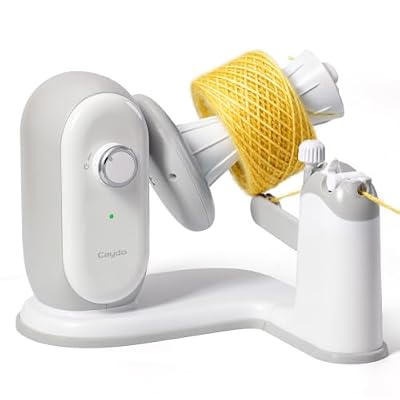
Caydo Electric Yarn Winder A1 Pro Max
Our verdict:
Best for big skeins
Best for winding big skeins and blanket yarn without cranking by hand.
View on Amazon- Makes yarn cakes up to 16 oz, per the maker
- Sits on a flat surface with no table clamp
- Adjustable tension and a guide arm for fine to bulky yarn
Keep in mind: It is more machine than an occasional knitter needs, and it takes more space than a hand winder.
Product details checked September 2026
The Caydo A1 Pro Max, rated for cakes up to 16 oz, handles blanket yarn and heavy hanks.
#3. Cordless Electric Yarn Winder (1800mAh battery): Best cordless option
Cordless Electric Yarn Winder (1800mAh battery)
Our verdict:
Best cordless option
Best for winding away from an outlet, at a class, on a porch or while traveling.
View on Amazon- Runs from a rechargeable 1800mAh battery, so it needs no outlet while winding
- Charges over a Type-C cable
- Stepless speed control and a dual-spring tension guide
Keep in mind: A battery is one more part that wears out, and you have to keep it charged.
Product details checked September 2026
This rechargeable model runs from a built-in battery and charges over Type-C, so you can wind away from an outlet.
Factors to consider when choosing an electric yarn winder
- Capacity: electric models vary a lot. One maker's range runs from up to 7 ounces to up to 16 ounces per cake. Match the capacity to your biggest skeins.
- Speed control: an adjustable dial lets you slow down for slippery or fine yarn and speed up for sturdy wool.
- Tension guide: a tensioner keeps the yarn feeding evenly. Without one, cakes can come out loose on one side.
- Power: check whether it needs a wall outlet, a USB port or batteries. Some newer models ship with a wall adapter as well as a USB cable.
- Stability: a heavy base or a clamp stops the winder from walking across the table at high speed.
- Noise: motors hum. If you wind late at night, look for a model sold as quiet.
How an Electric Yarn Winder Differs From a Hand Crank
A hand-crank winder needs one hand on the handle and one guiding the yarn. A motorized model frees up the cranking hand. Many models also sit on a table rather than clamping to it, so they work on surfaces a clamp cannot grip.
The motor also keeps a steady pace. That can make cakes more even, since your speed does not rise and fall as your arm tires.
The tradeoffs are a higher cost and some motor noise. It is also one more thing to plug in. Some models run from a USB cable, others from a wall adapter. A motor also means a part that can fail, where a hand crank has almost nothing to break. Our manual yarn winder guide covers the hand-powered side.
Tips for Using One
Start slowly. Tuck the yarn end into the core, set the lowest speed, and bring the speed up only once the cake has a few layers. Keep a light touch on the yarn so it does not wind too tight. A tight cake stretches the yarn, and stretched yarn can change your gauge.
Use a swift to hold the hank. An electric winder pulls yarn faster than a person holding a hank can feed it. See our wool swift guide for the styles.
Switch the motor off before you touch the core or remove the cake.
Electric Yarn Winder FAQ
Is a motorized winder better than a manual one?
It is faster and easier on your hands. A manual winder costs less and runs quietly, with less to break.
Do motorized winders work with all yarn?
Most handle common yarn weights. Slow the speed for slippery, fine or very fuzzy yarn, and check the capacity for bulky skeins.
Do I still need a swift?
It helps a lot. The motor pulls yarn fast, and a swift lets the hank turn freely without tangling.
Our Verdict
An electric yarn winder is worth buying if you wind often, wind big skeins, or find a hand crank hard on your wrists. Choose one with speed control, a tension guide and a capacity that fits your largest skeins, and pair it with a swift. If you only wind now and then, a manual winder does the same job for less.